

30.10.2026
When is it worth making the switch?
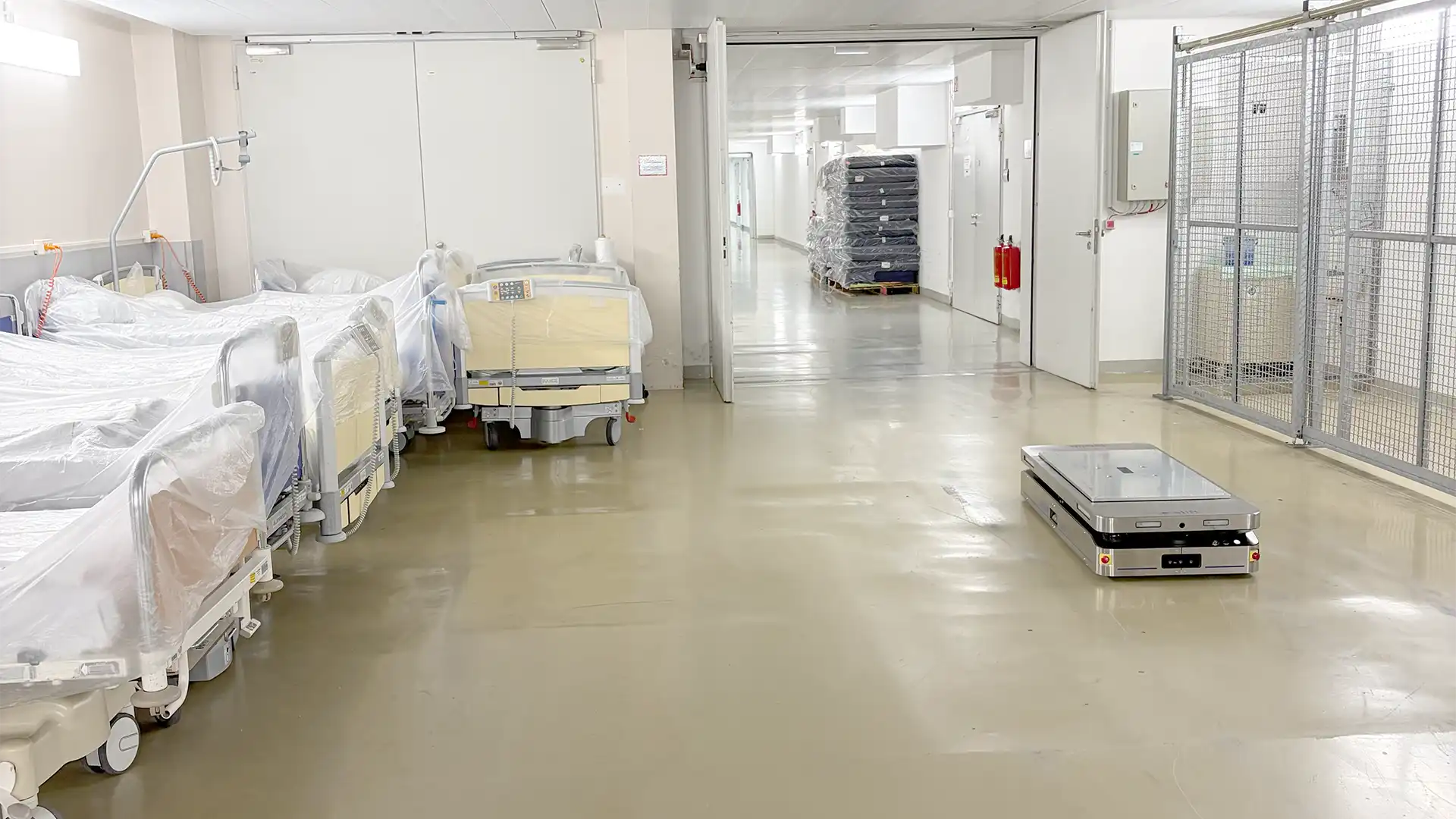
When is it worth making the switch?
Many hospitals are struggling with increasing demands whilst facing tighter budgets. This often raises the question of whether purchasing automated transport robots (AGVs / AMRs) is really worthwhile. We are asked this time and time again.
Our answer: Introducing automated transport systems is worthwhile for almost all hospitals – particularly under the following conditions:
The use of transport robots often leads to time savings of 15–30% on transport tasks and usually pays for itself within a few years. It is important to carry out an individual needs analysis and to integrate the technology step by step.
Automated transport systems are therefore a crucial component in making day-to-day hospital operations more efficient, safer and fit for the future.
You are currently viewing a placeholder content from Turnstile. To access the actual content, click the button below. Please note that doing so will share data with third-party providers.
More Information